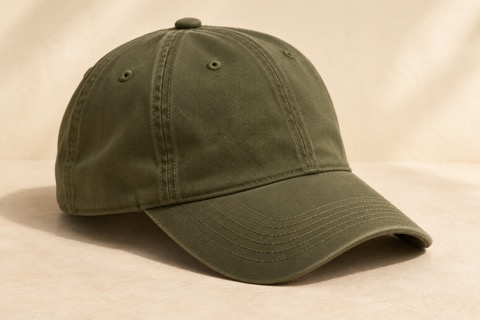
Compare two heights
Put a cap you like on a flat surface with the sweatband resting naturally. Take a profile photo at the same height as the brim. Mark the front height from the brim seam to the highest point it forms at the front, then note the center height above the sweatband. Where the cap rises matters because two shapes can share a total height and leave different amounts of space above your forehead.
Repeat the process with the candidate if you can handle it, or use a level side photo to compare proportions. A photo taken from above makes a crown look shallower and hides some of the front panel. A straight-on front view can show whether the profile peaks toward the center or keeps much of its height near the sides. When you have only one angle, log the observations you can make from that angle.
Check the front panel and closure
Look for a photo of the front panel from the inside. It may show a supported panel that will tend to hold its profile or a soft front that settles against the head. Height on the table describes the resting shape. The cap can sit at a different level when worn, especially if your head fills the lower part of the crown.
For an adjustable cap, look at the closure opening at the setting you actually use. Mark where your reference sits within its adjustment range. A new cap that reaches the required circumference only at the last position will give you little room to loosen it. Record both circumference and remaining adjustment if you can compare them.