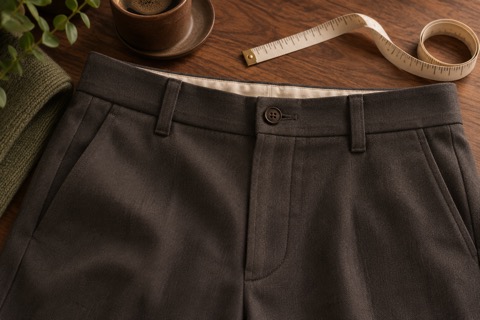
Record front and back separately
Fasten a pair of trousers that sits where you want it to sit. With the front facing up, find the seam intersection at the crotch and the midpoint of the top edge of the front waistband. Measure between those points following the seam. If you use a straight ruler instead of a soft tape, label the method and use it consistently. Switching from a straight line to a curved measurement across two pairs makes the difference hard to interpret.
Turn the trousers over to measure the back from the same crotch point to the center of the rear waistband. Rear seams often curve more than front seams, so let the trousers rest without pulling the fabric flat by force. For a pair with a shaped waistband, take both readings at the center. Keep a photo of the landmarks alongside the numbers if you intend to compare a listing with a different measurement convention.
Relate the numbers to how you sit
Put the reference trousers back on and sit in an ordinary chair. Notice where the front waistband meets your torso and whether the back drops when you lean forward. Record also where you wear the waistband while standing. A waistband held lower by design and a pair that slips down because of its waist size can create similar-looking front rises for different reasons.
A deeper back rise can help explain why one pair stays higher when sitting, but seat width and the crotch curve contribute too. If two candidates have identical numbers and very different cuts, look at the shape of the thigh and the rear seam before treating them as equivalents.