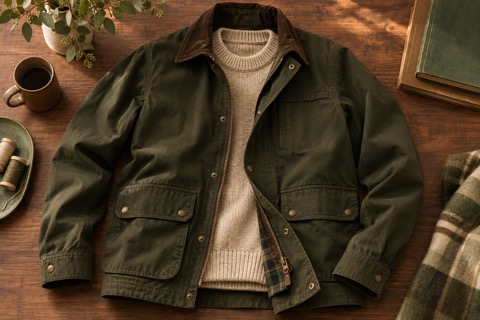
Use a reference that already works
Start with the jacket you can comfortably zip over your thickest usual layer. Put that combination on and perform two movements that match your day: reach forward as if holding a handlebar and raise one elbow as if reaching for a shelf. Notice whether resistance first appears across the upper back, around the upper arm or near the armhole. That tells you which flat measurement matters most for the next jacket.
Take the jacket off and close it before measuring across the chest below the armholes. Write down whether the number is a flat width or a circumference. Smooth the cloth without pulling. If the fit issue starts in the sleeve, measure the sleeve width in the same position below the armhole and mark that position in a quick photo. Measurements taken at different heights can look comparable while describing different parts of the sleeve.
Account for lining and sleeve shape
Two jackets with the same outer chest width can feel different inside. A bulky lining occupies space and a deep armhole can tug on the body of the jacket when you lift your arm. A low dropped shoulder also shifts where a shoulder seam sits, which makes a seam-to-seam comparison with a fitted jacket less useful. Record the construction beside the measurement and prioritize a similarly cut reference when you can.
If there is room to check just one extra detail, choose the one that changed your movement test. Someone whose forearms catch on a thick sweater cuff may need a photo of the jacket cuff opening. Someone who feels tension across the shoulder blades will learn more from the back width.